A mirror at 400 feet per minute. Fully inspected.
Some of what leaves your line ends up in orbit. Up there, a one-millimeter flaw is not a small problem, and there is no second chance to put it right.
Some of what leaves your line ends up in orbit.
Picture this. You manufacture specialty reflective films for demanding applications. Some of what leaves your line ends up in orbit. Up there, a one-millimeter flaw is not a small problem, and there is no second chance to put it right.
But reflective film fights inspection.
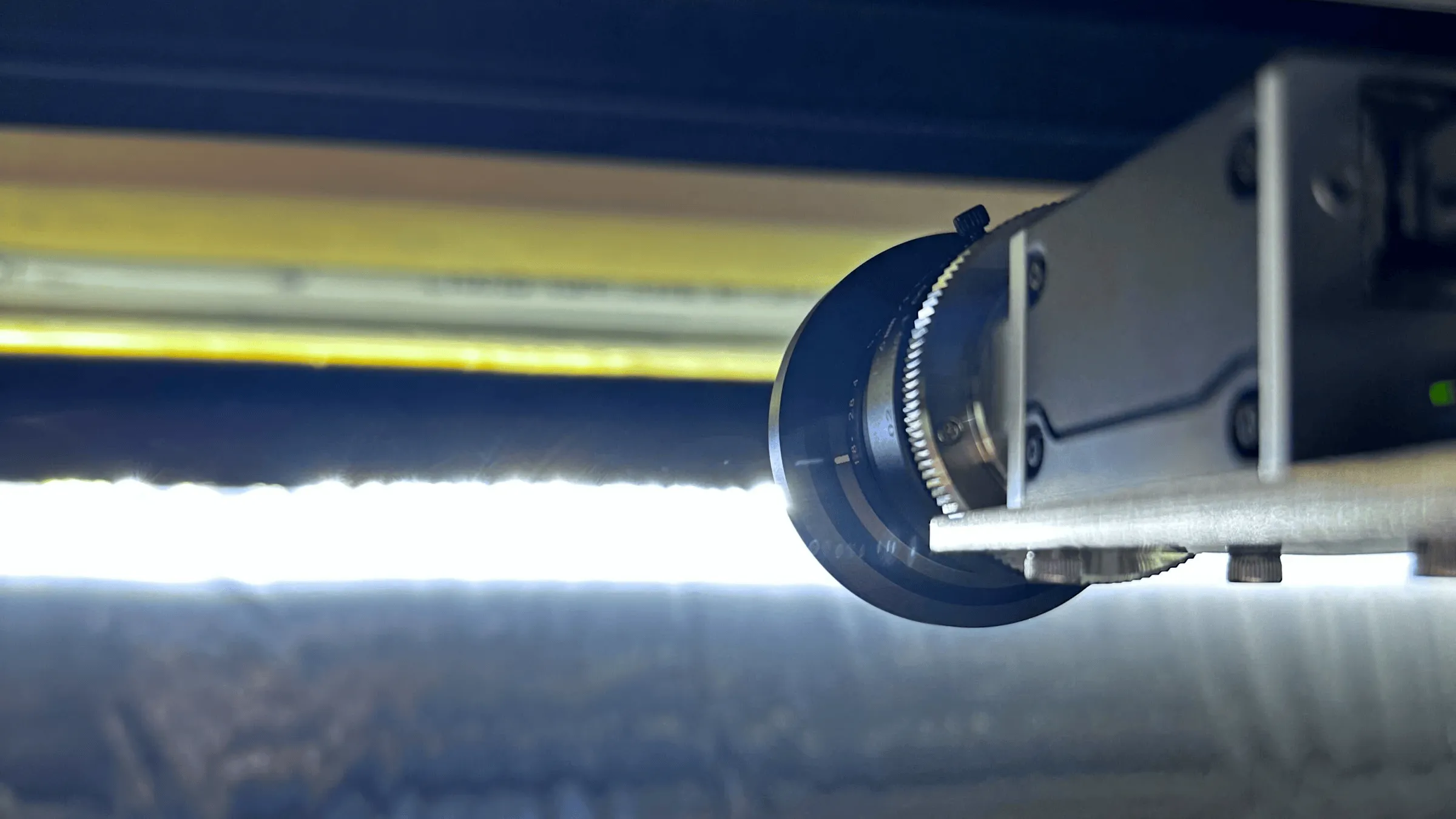
Its mirror-like surface throws light back at the camera, making reflections look like defects and real defects disappear.
At 400 feet per minute, even the most attentive operator cannot reliably see what is passing. They move on to higher-value work, leaving inspection stations unmanned and much of the roll unseen.
So you turn to Shelfmark, and we start with the light.
We configure the imaging around the material, making the surface readable before training the model to inspect it. Your engineers review detections, teaching the system the difference between a genuine defect and a reflection.
Now every inch of every roll is inspected at 400 feet per minute, without slowing the line.
Shelfmark catches defects as small as one millimeter, including flaws no person could see at that speed. Inspection no longer stops when an operator steps away, and the model gets sharper with every round of feedback.